

Every other capital-intensive industry broke the link between cost and output by moving work into the factory. Data centers are the holdout, and the AI buildout can't afford to keep scaling in a straight line.
Ask anyone in the data center industry what it takes to double your capacity, and the answer comes back immediately. Twice the money, twice the time, twice the people. That assumption is built into how the industry plans and budgets, and it rarely gets questioned.
It should.
The straight line between capacity and cost is not a law of physics. It is a result of how the industry still builds, and every other heavy industry moved past it years ago. Data centers have not.
But cost and capacity don’t have to follow the same upward trend. Other industries have broken the pattern, building twice as big without paying twice as much. Data centers can do the same — must do the same, if builders want to survive — and it starts by changing how we measure cost.
Why costs keep climbing
Most of the cost problem in this industry comes down to one habit. The industry builds every data center like it's the first one anyone has ever built.
Every site gets engineered as a one-off, with new drawings, a new crew, and a fresh round of the same problems the last project already solved. Most of the real work happens outdoors on the job site, where weather, labor, and coordination all work against the timeline.
Build that way, and doubling your capacity means roughly doubling your labor, your schedule, and your risk. That is unsustainable. With AI demand climbing and everyone racing to bring compute online, building in a straight line caps how much capacity you can deliver.
How other industries bent the curve
I've spent my career building factories. Semiconductor fabs, battery plants, car plants. Every one of those industries used to have the same straight-line cost problem that data centers have now.
They solved it when they stopped building on-site and started building in a factory.
Once you build the same thing over and over in a controlled environment instead of in the field, three things happen:
- Unit costs come down because you're not reinventing the process each time.
- Quality and speed go up because the conditions are consistent.
- Teams learn from missteps made more easily, improving the process over time.
A data center built correctly is closer to a manufactured product than a construction project. Most of the industry has not caught up to that, even though every other capital-heavy sector made this shift years ago. Data centers are simply late to adopt it.
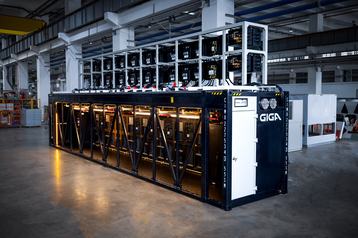
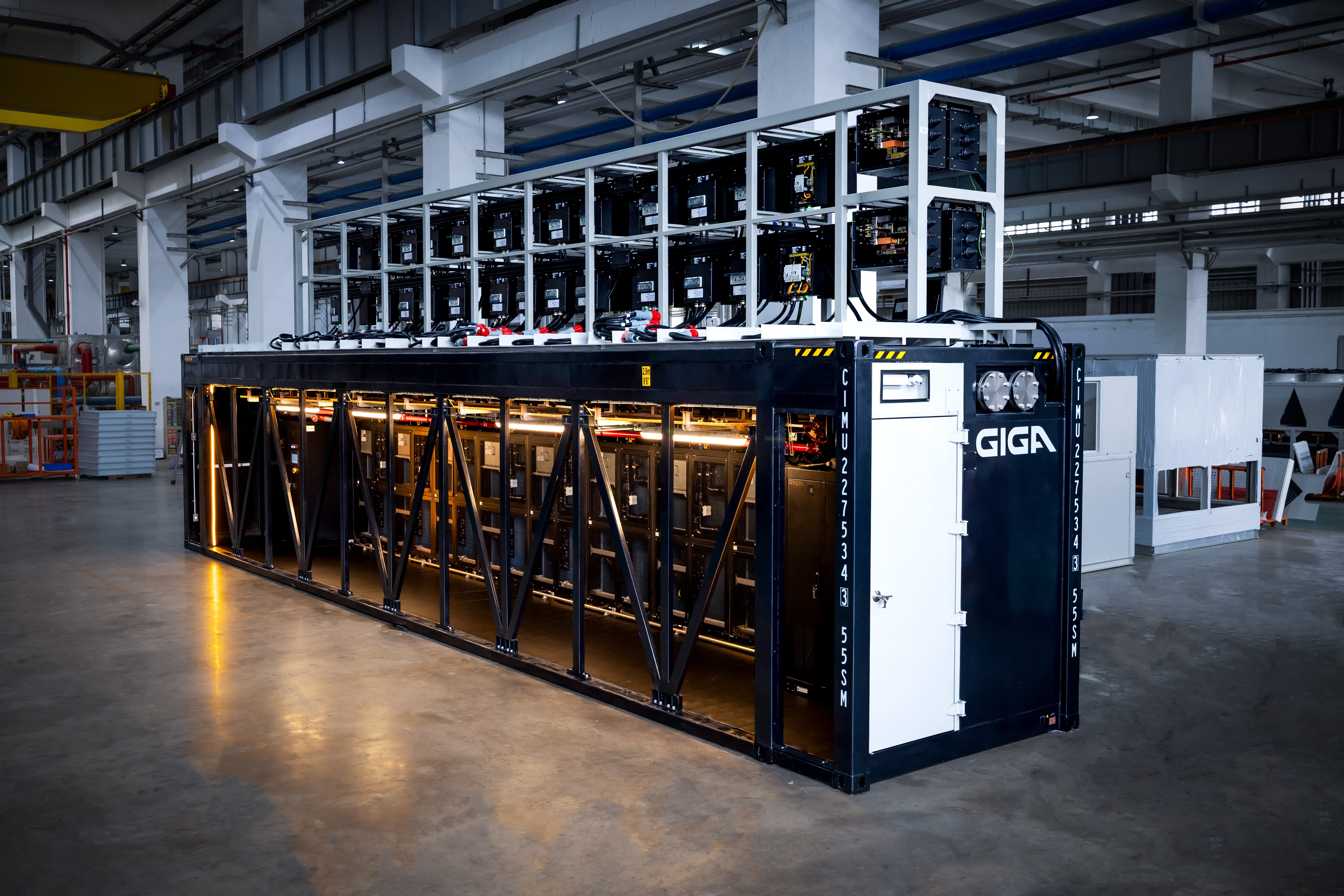
Where the curve bends for data centers
Moving a data center build into the factory comes down to a few critical steps.
You build the modules in a plant and test them before they ship, instead of fabricating everything custom in the field.
You commission them ahead of time, so the work left on site is connecting power and cooling.
And you build to equipment standards like UL, so a module is treated as equipment rather than permitted like a new building every time.
Building the modules in the factory and then shipping and connecting them in the field can cut your field labor by up to 90%, giving you the same or greater capacity with a fraction of the electricians a conventional job would have needed on site. This advantage matters more than ever with electrician shortages ahead.
When you follow these steps, you can build data centers cheaper, faster, and at a higher quality. A factory floor gives you more control than a job site ever will. Conditions are consistent, quality checks are built into the process, and every unit comes out the same.
The new North Star metric for data center builds
We've covered why data center costs still climb in a straight line, how other industries got off that line years ago, and what it takes to bend the same curve once you move the work into the factory. Taking that approach on your next build starts with changing the number you measure.
Most teams measure total project cost, but that's the wrong number. Total cost rewards the lowest sticker price, but that’s not enough in the current market. A low sticker price does not help you when the market needs capacity online fast.
Measure cost per megawatt and time to energization instead. Those are the numbers that track capacity that actually comes online, and they are the standard the market runs on now.
The operators who make this change will set the pace moving forward. The ones who keep building in a straight line will fall behind.
To see this approach in practice, look at Giga's GigaBase system. Our modular AI data center is pre-engineered and scalable, and it goes from dirt to data in as few as 9 months.
Reach out to our team if you want to learn more.
Discover more
-

Sponsored The AI buildout has hit a labor wall
Everyone's fighting over GPUs and megawatts, but often, what actually stalls a build is finding people to wire it. Here's why the labor problem is the real ceiling
-

To open the AI data center bottleneck, move the gigabits closer to the gigawatts
A fast-emerging next-generation data transmission technology is bringing new geographic flexibility to where data centers are built
-

Sponsored Simplicity is the new scalability
In the AI era, competitive advantage will come not from offering unlimited choice, but from knowing which choices matter
Comments