
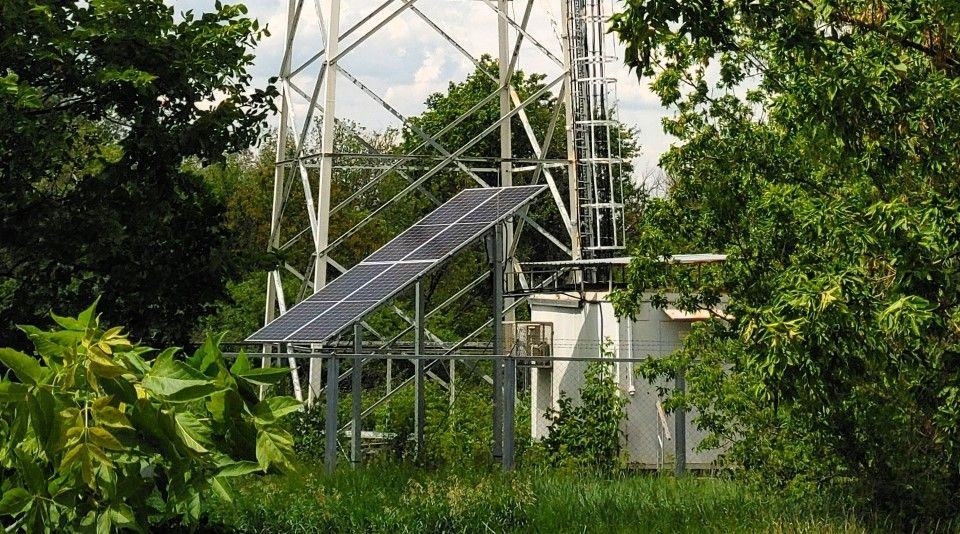
Vodafone Ukraine has announced plans to install solar arrays at 400 base stations nationwide.
The deployment builds on 100 solar installations already installed across base stations in the country. Following the second phase of deployments, the company will have deployed solar arrays across 500 base stations. Each base station has an array with a capacity of approximately 360kW.
Vodafone completed the first phase of the project in June 2026, deploying solar arrays across 14 regions in Ukraine. According to the company, the solar arrays generated more than 110,000kWh of electricity. It also claimed that, under favorable conditions, some base stations could operate without drawing electricity from the external grid.
The company said that approximately 380MWh per year of energy was generated by the first phase, which covered around 30 percent of the annual electricity consumption of the respective base stations.
“The first summer was an opportunity to test the technology under real-world conditions. The first 100 solar power systems generated more than 110,000 kWh of electricity during the summer alone. At times of peak solar generation, some base stations were able to operate without drawing electricity from the external grid,” said Yevhenii Frunza, chief technology officer at Vodafone Ukraine. “However, the key benefit for us is systemic: solar power reduces grid consumption and helps preserve battery charge, increasing the power reserve available during outages.”
The project is part of Vodafone’s broader program to strengthen the energy resilience of its network amid the ongoing war with Russia, which has seen sustained attacks across the country’s energy, telecom, and data center infrastructure.
Last week, a ballistic missile attack hit a data center owned by the Ukrainian telecommunications company Datagroup in Kyiv, rendering the site inoperable.
Ukraine, for its part, has struck back with multiple attacks on Russian-owned digital infrastructure, including strikes on data centers owned by Yandex.
Russian officials have been discussing mitigating measures for attacks on its data centers, ranging from building “doomsday” data centers to siting facilities in disused coal mines or friendly neighboring territories.
The conflict between Ukraine and Russia has been ongoing since 2014, with significant escalation in 2022, initiated by Russia.





Comments