
Candidates running on anti-data-center pledges have swept to victory in the US midterm elections.
On a night when the Democrats took the Senate, the House, and scored notable victories in gubernatorial races, some of the most vehement opponents of the AI digital infrastructure build-out enjoyed electoral success.
With some results still coming in, the Democrats have gained seven seats in the Senate and 25 seats in the House, giving them control of both chambers for the second half of Republican President Donald Trump’s term in office.
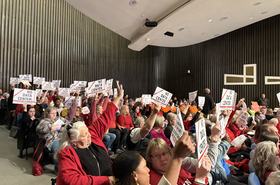
A taxonomy of American data center opposition: The neighbors
Data centers have become a key issue in the US mid-term elections
AI data centers were a key issue during the election campaign, with communities across the US rallying against the gigawatt-scale campuses being planned in many states, citing concerns over power and water availability, as well as the impact of AI on the labor market.
President Trump has been a vocal supporter of AI companies and the data center build-out as a vehicle for economic growth. And while the election result will be seen as a reaction to the rapidly rising cost of living in the US and the unpopular war in Iran, the widespread opposition to data centers among Americans has been a big factor, and some formerly pro-data center candidates from the Republican Party have turned against the industry, backing moratoriums on new projects or other forms of restrictions.
In the gubernatorial races, 26 candidates across 21 of the 36 states up for grabs ran on tickets promising anti-data center legislation. With one result still to come, the Democrats have made five gains, most surprisingly in the Republican stronghold of Texas, the second-largest data center market in the world, which has 6.5GW of capacity under development. Here, Democrat Gina Hinojosa unseated incumbent Republican Greg Abbott.
Abbott has been supportive of the data center industry for years, but introduced a temporary moratorium on new projects earlier this summer to allow grid operator ERCOT to carry out an audit of interconnection requests from large load users in the state. Hinojosa described this as a “scam,” stating: “Abbott will likely lift it on November 4, right after the election. The only way Texans are protected is when real laws are passed.”
Her campaign website calls for “an immediate moratorium on data centers to last until the legislature can meet to put in place real protections so Texans can have a seat at the table to decide if and how data centers come into their communities.”
The result is bad news for Trump-backing SpaceX billionaire Elon Musk, who moved his businesses to Texas from California in 2020 to take advantage of the low-tax, low-regulation regime in the state, but now may face less favorable conditions. Musk, who has spent some $474 million trying to get Republican candidates elected in the midterms, is planning to build a huge chip factory, TeraFab, in Grimes County, Texas, to make silicon for SpaceX, its AI division SpaceXAI, and another of Musk’s firms, automaker Tesla. In June, the TeraFab was granted a 100 percent property tax abatement by local councilors, much to the chagrin of many local residents.
Following the election results, Musk tweeted: “Guess my election-interfering space lasers didn’t work this time,” and added that “data centers in space looking pretty appealing right now.” SpaceX is one of several companies looking to put AI compute in orbit.
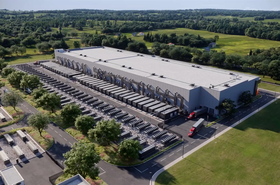
DataBank's CEO on the Texas data center moratorium and the impact of the US midterm elections
New regulatory requirements could filter out rogue projects, Raul Martynek says
In Ohio, another major US data center market, the Governor’s office flipped from red to blue, with Amy Acton defeating Vivek Ramaswamy in the race to replace outgoing Republican Mike DeWine.
Prior to the election, Acton said data centers are “undermining Ohio’s core values,” and stated: “I support a conditional moratorium on data centers to ensure they cover one hundred percent of their utility costs, exclusively build with union labor, operate with full transparency, support the needs of local communities, live by Ohio’s environmental standards, and bring jobs to former industrial areas that have been left behind."
She added: “Ohio is open for business, but we are not up for sale.” Ramaswamy had stopped short of calling for a moratorium.
In Georgia, Democratic nominee Keisha Lance Bottoms scored a historic victory and will become the first black female governor in US history. Lance Bottoms has called for a statewide pause on data center developments, and said during the campaign: “Let us take a pause, assess fully, assess comprehensively, assess the impact that these data centers are having on our environment, on our utility bills, what it means to have them in communities.”
Her position was in stark contrast to the defeated Republican candidate, billionaire Rick Jackson, who is reportedly an investor in a data center project in Bowie County, Texas. He said it should be up to county authorities to decide whether to accept data centers, pointing to the tax revenues they can bring.
Victors elsewhere included incumbent Democratic governor Josh Shapiro of Pennsylvania, who imposed strict legislation around data centers over the summer, while New York’s Kathy Hochul also secured re-election. Hochul became the first governor to introduce a statewide data center moratorium when she introduced a one-year ban in the Empire State in July.






Comments