
The Symbiosis Coalition, a consortium of corporate carbon-removal buyers including Google, Meta, and Microsoft, has signed a 320,000-ton, ten-year carbon-removal deal with US agroforestry firm Working Trees.
Under the agreement, Google has committed to purchasing 270,000 tons of removals.
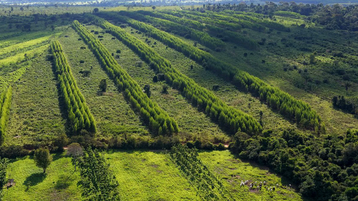
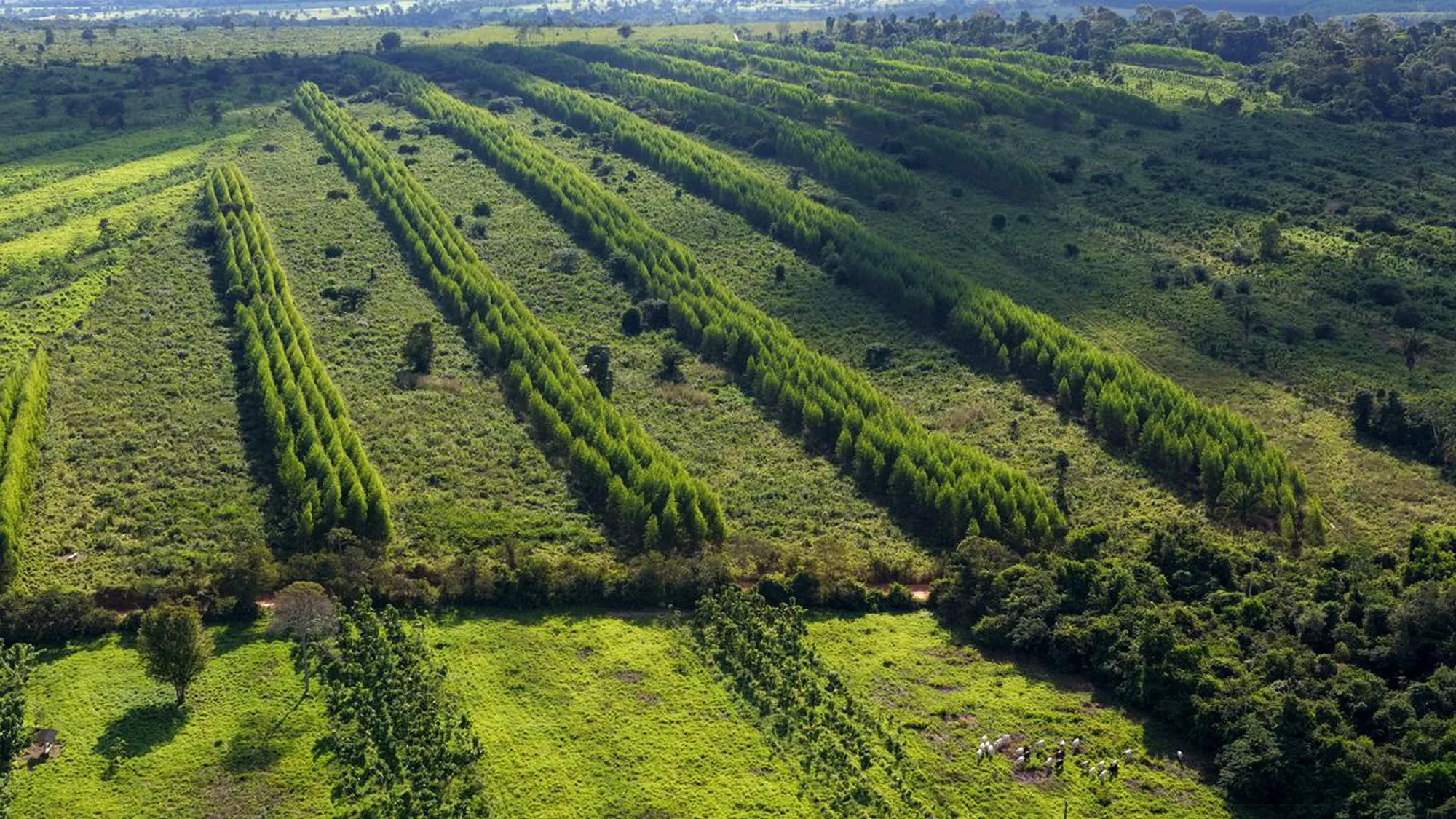
Working Trees generates carbon removal credits by converting degraded cattle pastures in Brazil into mixed-species silvopasture systems.
Silvopasture is a regenerative agroforestry practice that intentionally integrates trees, forage, and grazing livestock on the same land, creating a natural carbon sink. Beyond carbon removal, the projects provide regional ranchers with diversified income streams through timber and carbon revenues.
According to the partners, the process has strong carbon-removal potential. Non-profit Project Drawdown states that the process has one of the highest carbon sequestration rates of any farming system; however, it warns that while the process can lead to reduced greenhouse gas emissions, it does not occur in every case.
The process has yet to be deployed at scale, with several key factors required, including secure land tenure, favorable tree-growing conditions, appropriate species selection, good accessibility conditions for large-scale planting, and strong local technical expertise to execute on the ground.
To prove its scalability, Working Trees has undertaken pilot projects across more than 2,000 hectares. The project, backed by the Symbiosis Coalition, will seek to restore 8,700 hectares of degraded and semi-degraded pasture as part of a 50,000-hectare project across the southeastern Amazon and central Cerrado, Brazil. It represents the coalition's first silvopasture project.
“Silvopasture is one of the most underused tools we have for nature-based carbon removal, and what excites us about the Working Trees project is how much room there is to scale it. Working Trees' project is sequestering carbon while also improving the land that communities rely on,” said Julia Strong, executive director of Symbiosis Coalition.
“This partnership represents a significant leap forward for high-integrity, natural climate solutions. Cattle grazing is one of the most dominant land uses globally; by integrating trees directly onto active pastures, Working Trees demonstrates that we don't have to choose between food production and ecological restoration. It's a scalable, tech-driven approach that benefits both global carbon removal and local farming livelihoods,” added Randy Spock, head of Carbon Removal at Google.
The Symbiosis Coalition said that Working Trees was selected for offtake as it is strategically designed to fit the local social and ecological context. The coalition claims that the approach has the potential to scale between five and ten million hectares of pastureland. The body framed it as an early step toward a larger opportunity.
Symbiosis was formed in May of 2024, committing to contract up to 20 million tons in nature-based carbon removal credits by 2030. Since its inception, it has backed Brazilian reforestation firm Mombak, agreeing to purchase 200,000 tons of carbon removal credits, tied to projects in the Brazilian Amazon rainforest.
Following this, it signed a deal with Thryve.Earth, committing to purchase 260,000 tons of carbon removal credits from a reforestation project in Sulawesi, Indonesia.



Comments