
Google-backed nuclear fusion company Commonwealth Fusion Systems (CFS) has raised an additional $1 billion in equity financing, bringing its total raised to $4bn.
The financing follows its $1.8bn Series B funding round completed in 2021 and an $863 million raise completed last year. According to CFS, the raise represents 30 percent of the total raised by all fusion companies.
“CFS is making what once was impossible into inevitable. In the 2030s, we will put commercial fusion on the grid. We have the science that works and the proven execution that’s consistently validated by the market. We regularly welcome investors from around the world to our headquarters in Devens, Massachusetts, where they see real and tangible progress as we ready support systems and finalize the assembly of SPARC,” said Bob Mumgaard, CEO and co-founder. “In unlocking commercial fusion energy, we’re on a path to make an impact at a civilizational level.”
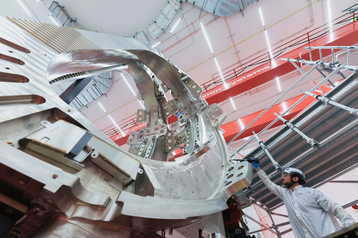
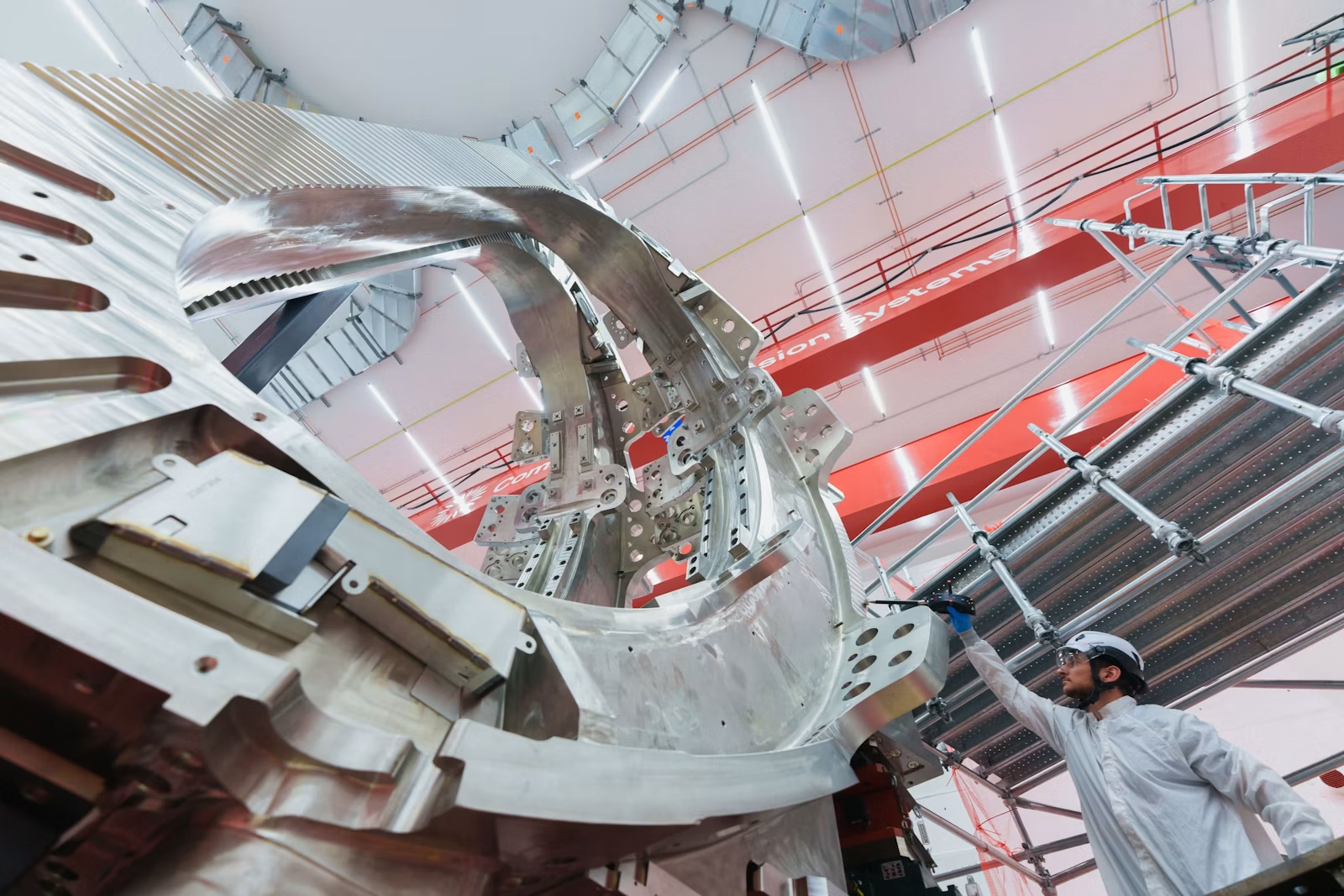
According to CFS, it will use the funds to support the assembly of its SPARC fusion demonstration machine, towards the eventual development of a commercial fusion reactor.
CFS is targeting first plasma from SPARC in 2027, with its first commercial fusion power plant, ARC, expected to deliver electricity to the grid in the early 2030s. The ARC plant has a planned capacity of 400MW, and is tied to a long-term Power Purchase Agreement (PPA) with Google, which last year committed to offtake 200MW from the plant upon its completion.
The ARC project is being developed at the James River Industrial Park in Chesterfield County. Should it reach operational status on schedule, it is expected to be the first fusion project of its kind to deliver power to an electricity grid. The plant is being developed in partnership with Dominion Energy. Together, the firms have submitted an interconnection request to PJM Interconnection for the plant.
Earlier this year, CFS partnered with Nvidia and Siemens to develop a digital twin of its SPARC fusion reactor.
According to CFS, the digital twin system will integrate engineering, manufacturing, and operational data from Siemens’ Xcelerator portfolio, including NX Designcenter and Teamcenter product lifecycle management (PLM) software, which CFS already uses to design, catalog, and manage SPARC’s complex assemblies. The data will then be fed into CFS’ modeling and simulation workflows, enabling the use of AI-powered tools throughout the machine's lifecycle.
CFS claimed that the collaboration will complement its existing AI partnerships, including work with Google DeepMind focused on plasma physics and control. The Nvidia-Siemens deal is instead aimed at the broader industrial system, including manufacturing, plant operations, and full-machine integration.
Fusion is fast becoming a hot topic within the tech space, with several companies securing backing from some of the biggest players in the market. Helion became the first fusion firm to sign an offtake agreement back in May 2023, inking a 50MW PPA with Microsoft. In March, reports surfaced that OpenAI was in talks with the company to secure a guaranteed portion of Helion's production, starting at 12.5 percent. The capacity would account for up to 5GW of power by 2030, scaling to 50GW of power by 2035. The reports have yet to be formally confirmed by either company.
In addition to CFS, Google has also backed fusion developer TAE Technologies, which recently raised more than $150m in its latest funding round.



Comments