
AMD posted record revenue for Q2 2026, with the chip company’s data center segment driving the majority of the growth during the three-month period.
Total revenue for the quarter was $11.5 billion, up 50 percent year-over-year (YoY) and 13 percent quarter-over-quarter (QoQ). Data center revenue grew 107 percent YoY and 16 percent QoQ, totaling $6.7bn for the second quarter.
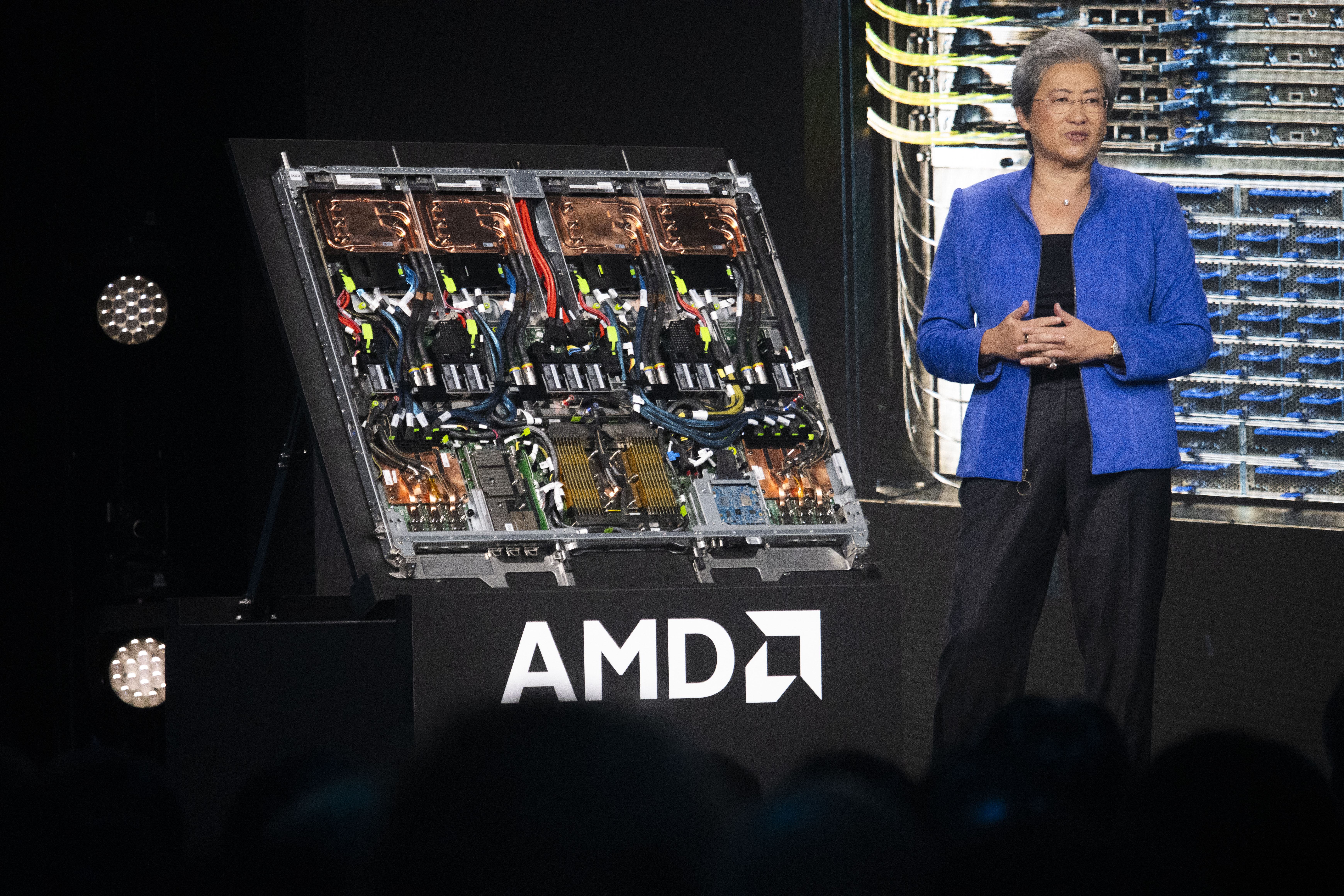
AMD attributed the segment’s growth to “strong demand for AMD Epyc processors and AMD Instinct GPUs,” including a 70 percent YoY increase in the sales of Epyc CPUs. Previously, AMD CEO Lisa Su has said the rise of agentic AI will cause GPU-to-CPU ratios to shrink from 1:4 or 1:8 closer to 1:1.
On the company’s earnings call, Su said that Data Center revenue now represents 58 percent of its total revenue. For Q2 2025, the segment represented around 42 percent of total revenue.
Looking ahead to Q3, AMD has forecast revenue of $13bn, plus or minus $300 million, with YoY revenue growth expected to hit around 41 percent, once again driven by “very strong double-digit” data center revenue growth, CFO Jean Hu said on the same call.
“We expect data center sales to accelerate in the second half of 2026, driving stronger overall revenue growth and continued earnings expansion,” Hu said.
The results come two weeks after AMD’s Advancing AI event in San Francisco, California, where the company officially launched its Helios rackscale solution – which has entered full production and is expected to start shipping by the end of the third quarter.
The company also announced partnerships with Meta, Microsoft, and OpenAI for Helios deployments, with AMD also set to invest up to $5bn in Anthropic, with the AI company simultaneously announcing plans to deploy up to 2GW of Instinct MI450 GPUs in Helios, beginning H1 2027.
Following the rollout of Helios, Su told analysts on the earnings call that AMD plans to launch “a new rackscale AI platform every year with each generation delivering significant performance, efficiency, and TCO gains.”
“In 2027, our next-generation platform combines MI500 series GPUs, Verona CPUs, and Pensando networking with expanded scale-up domains and both copper- and optical-based interconnects. Customer engagement on MI500 is very strong, with multiple customers working closely with us as they plan their next-generation AI infrastructure,” Su said.






Comments